… about the VII International Tuishou Competition in Guadalajara, Spain on 11/16/24, and what made it so special.
The most obvious distinction: there is ONLY push hands (tuishou) at the International Tuishou Competition. No tai chi forms or weapons demonstrations, not to mention any other style whether internal or external. This creates an environment where martial artists from any style will compete together according to relatively safe rules. I’m used to killing a lot of time at crowded tournaments. Typically a handful of tai chi people occupy one odd ring midst a zoo of other performances and point sparring. This mix makes it harder to focus on the sport we trained for, and leads to scheduling issues. For example, judges or referees have been assigned to events that they have little or no experience with.
I’ve never encountered teams of female players at this level before. I imagine what it would be like to train with 5-10 other women, to travel together and support each other through tournament day. I love my team that consists of my husband and my daughter of course. I also have hopes of recruiting and training a US Team for the World Cup next year.
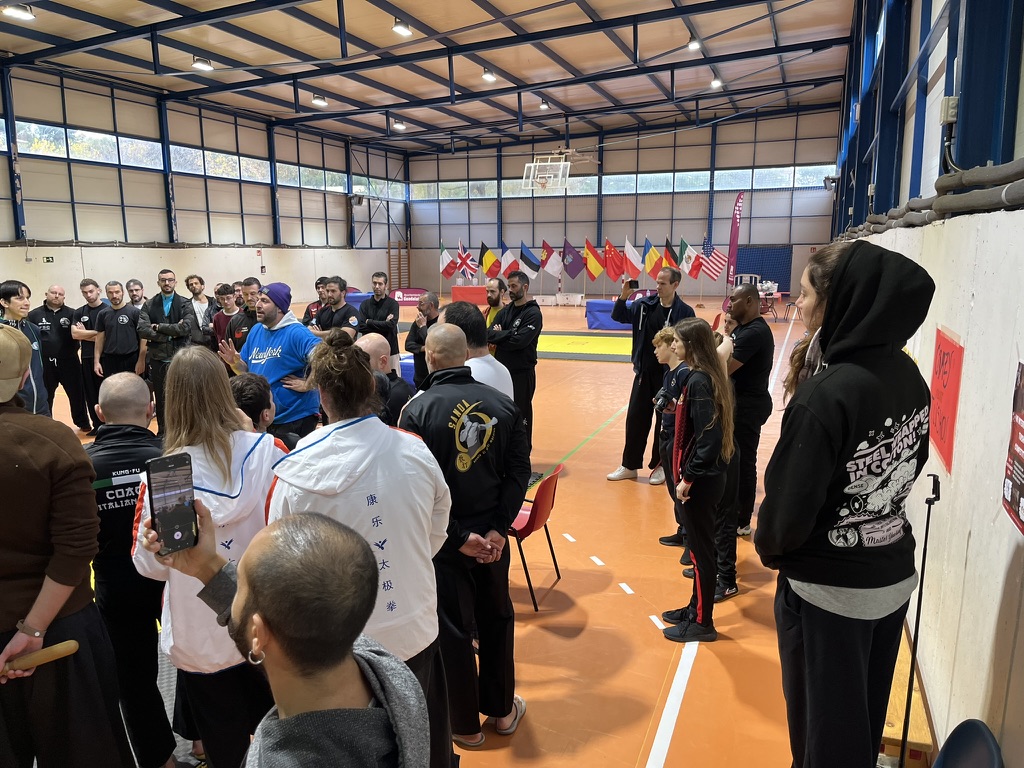
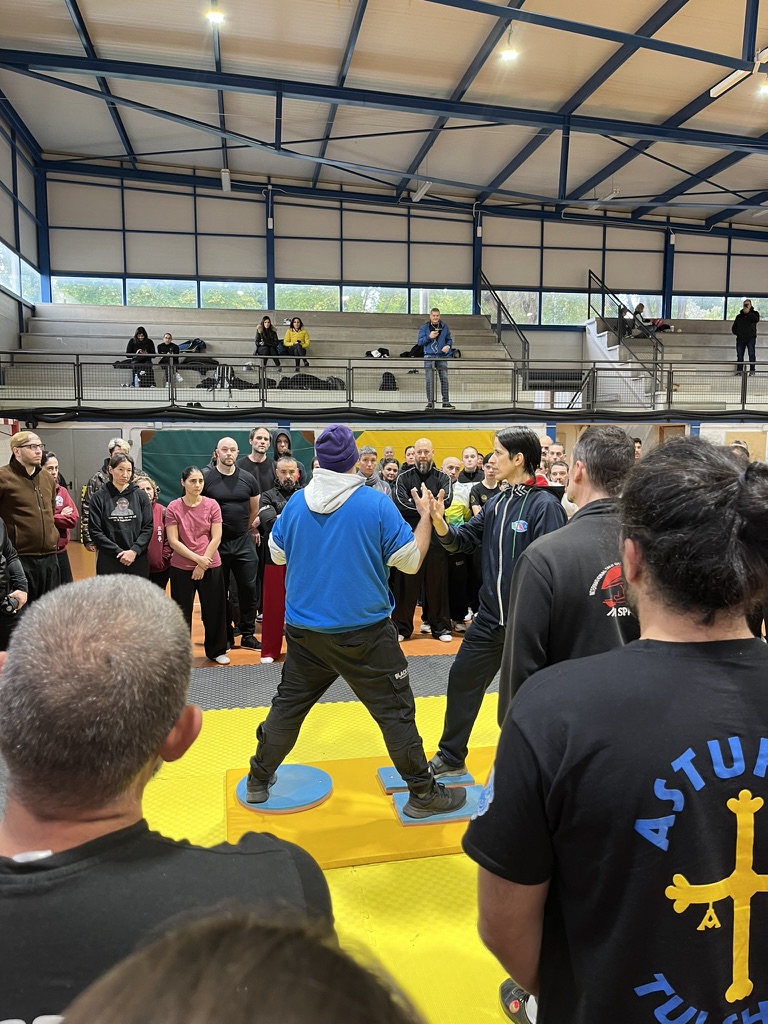
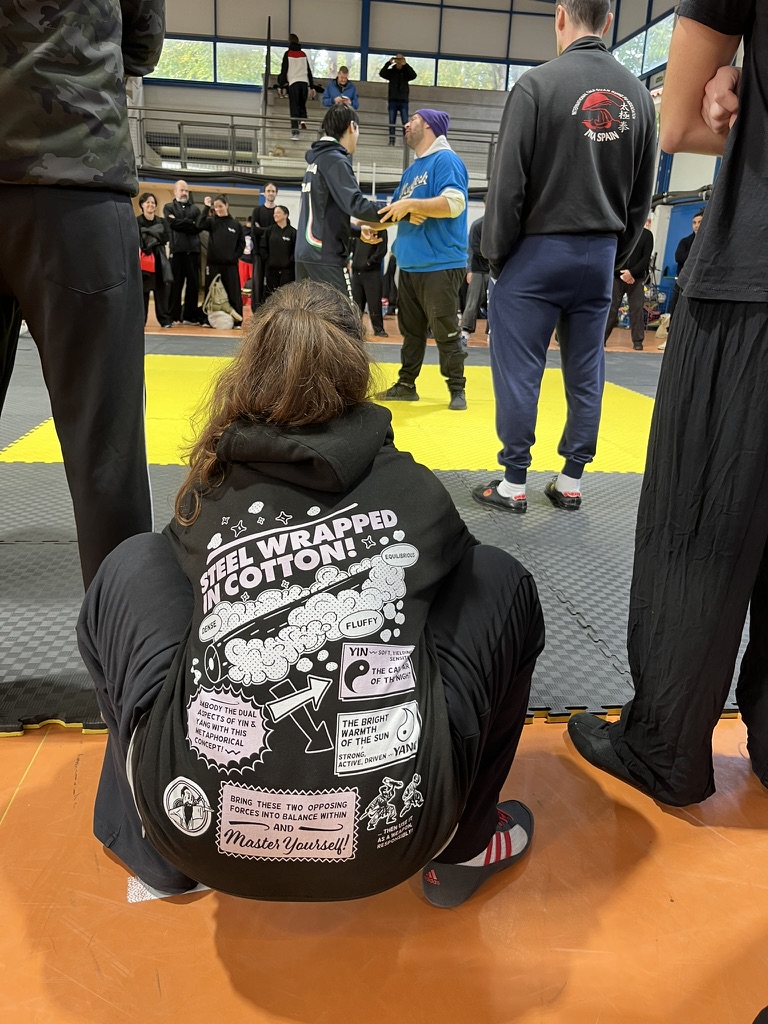
Neither have I encountered a youth push hands competition before. There were not a lot of kids, but there were serious girls and boys there with their coaches, playing by the same rules as the adults.
Having so many skilled opponents in my division and either being in a match or being on deck from 9AM-6PM made this my most challenging tournament yet. During the hour break I ate half an egg and half a banana and literally took a nap on the mats.
The day was designed to be at this high level, planned to not waste your time but to keep you in a ready state. I get it, in my bones I can feel this is a tournament for people who love to play tuishou, organized by someone who truly loves to play tuishou. I asked around to others who’ve competed around Europe and Asia if any other events elsewhere compare, and from what I hear, it’s not just the most fun, it really does bring the best players.
King of the Mountain events (both fixed and moving) demanded another level of stamina and focus. Medals are awarded based on the total points scored in the 10-20 minute game (time determined based on the total number of competitors.) I believe this is also part of the Legends of Tuishou annual tournament in Moscow. If you score, you stay in the ring, and if you don’t you go back to the end of the line. When you’re in, each match is against a different person, so focus is even more important as it’s harder to apply any predictive strategy. Every time I got out, I pinpointed the exact moment my mind called out “Has it been ten minutes yet?” or “Is anyone as tired as I am?”
Fixed Step tournaments follow Taiwan rules, with the same platform, and with even clearer judging on fouls in my honest opinion. It seems the format differs a little to give all players more matches, so I was able to play every one in my category. I read the rules, but I don’t speak Spanish and there is not a very clear English translation. I think it’s worth creating the document, since I would want to recreate a very similar tournament in my hometown.
Moving Step rules follow Beijing rules, which I had never encountered before. This was my first time competing in a tournament that allowed foot sweeps and trips. There are a few US tournaments that also include these judo style take-down techniques. I’ve only taken one judo class ever- and I drilled hip throws the entire time. So, I’m glad I accomplished a couple in the ring. I worked with Naxo a couple of times when he was in NYC last spring, which gave me an idea of what to work on, and it definitely gave me a good idea of what it’s like to be swept and thrown and still get up and do tai chi. I’m also more familiar with scoring that favors the player that lands on top when both players fall, however here there is no point in that case.
Finally, there is a meet after the awards have finished. Instead of a banquet dinner or further formalities before everyone packs up and grabs business cards and goes home, what do tuishou players really need? More time to play tuishou. Allowed to shed the armor and drama of competition day, I got to play again with some of my competitors, and with many women and men I wouldn’t have otherwise. It was fun to see several of the guys calling dibs on playing me next. Friendly, relaxed play and skill sharing are always fun, and it always breaks my heart to miss that opportunity when I’ve finally met some other players from out of state.
I think a chance to play again in a celebratory atmosphere is good for both the mind and body to process what it’s just been through, to recover and learn the most. I’m very happy to say I didn’t get injured at all, though I was sore in all the right places, with a neat row of bruises under each arm. I got a scare when someone’s knee landed in my abdomen, mainly because I didn’t think it was an accident, but I was fine. I don’t have a full report on the event, but I know there were a handful of sprained ankles and a dislocated shoulder, nothing too gruesome. Since all events and awards were finished by around 8:30 Saturday, Sunday welcomed everyone back to come together as music played and friends were made. This went on for about two hours, but I think it could have been as good for at least four or five.
The rules explained a game that I’d only seen kids play out of jest and had never given serious consideration. I thought team push hands, two vs. one, would be one of my events, and a very interesting one to watch. The setup is from the same position with three people arranged in a triangle. The one is connected to the two on either side, so the two can actually coordinate attacks and defenses together. I got to play this once or twice at the Sunday meet, and share one of my coach’s favorite restricted step variations. With more time, I would have asked Naxo’s students about more of the games and variations I find so appetizing.
In my experience, the playful heart of this game is rarely seen so clearly. Innovative experimentation, inviting openness to new information, leads the growing edges of this art.
When Naxo de la Encina told us about this tournament he had organized in his hometown, he was also encouraging us to do the same. He acts like a Tuishou missionary teaching and promoting all over the world, sharing his passion. I am so grateful that he has created this experience for a whole generation of players, and for his inspiration. It wasn’t easy, and it was so worth it.

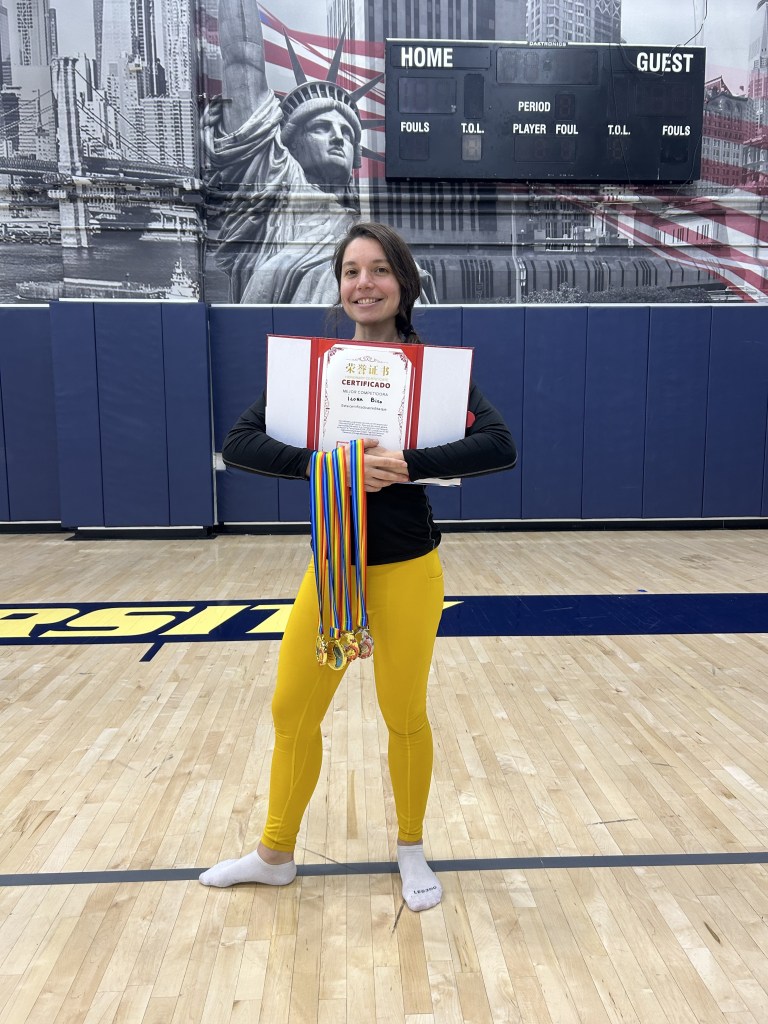
Just to top it off, I have never seen such beautiful medals or certificates. Rainbows and glitter, really? There was even a cake, just to share.
There were so many amazing competitors, and my videos here only capture some personal highlights and points to remember. In addition to my 3 gold medals and one silver, I was awarded the highest honor at the close of the awards ceremony:
“Best Global Female Competitor.”
 Push Hands Now